Every dollar spent on an underperforming paid ad campaign drains your ROI while competitors capture your market share. Paying for high click volumes that never generate leads or sales is an expensive strategy mistake.
When clicks spike but revenue stalls, your funnel has structural leaks. Industry benchmarks show that pages loading in 1 second achieve 3 times higher conversion rates compared to those loading in 5 seconds, and even a 1-second delay can slice overall conversions by up to 7%. High engagement paired with low sales signals a broken path between ad impression and final checkout.
Traffic drops off when your ad promises something that your destination page fails to deliver immediately. Aligning user intent, message match, load speed, and tracking transforms wasted ad spend into reliable customer growth.
What Is Ad Conversion Rate and Why Does It Matter?
Before fixing your funnel, establish your baseline metrics:
- Conversion Rate: The percentage of ad clickers who complete your target action, such as filling out a contact form or completing a purchase.
- Message Match: How closely your page headline, design, and offer mirror the exact copy and visual style of the ad.
Driving campaign traffic without optimizing post-click behavior pays for audience attention that simply leaks away. Fixing conversion bottlenecks protects your ad budget and helps scale your business profitably.
Here is what this guide covers:
- The 5 primary structural flaws killing your campaign performance.
- A conversion checklist and a step-by-step diagnostic framework.
Let's start…
Mismatch Between Ad Copy and Landing Page Offer
What It Looks Like
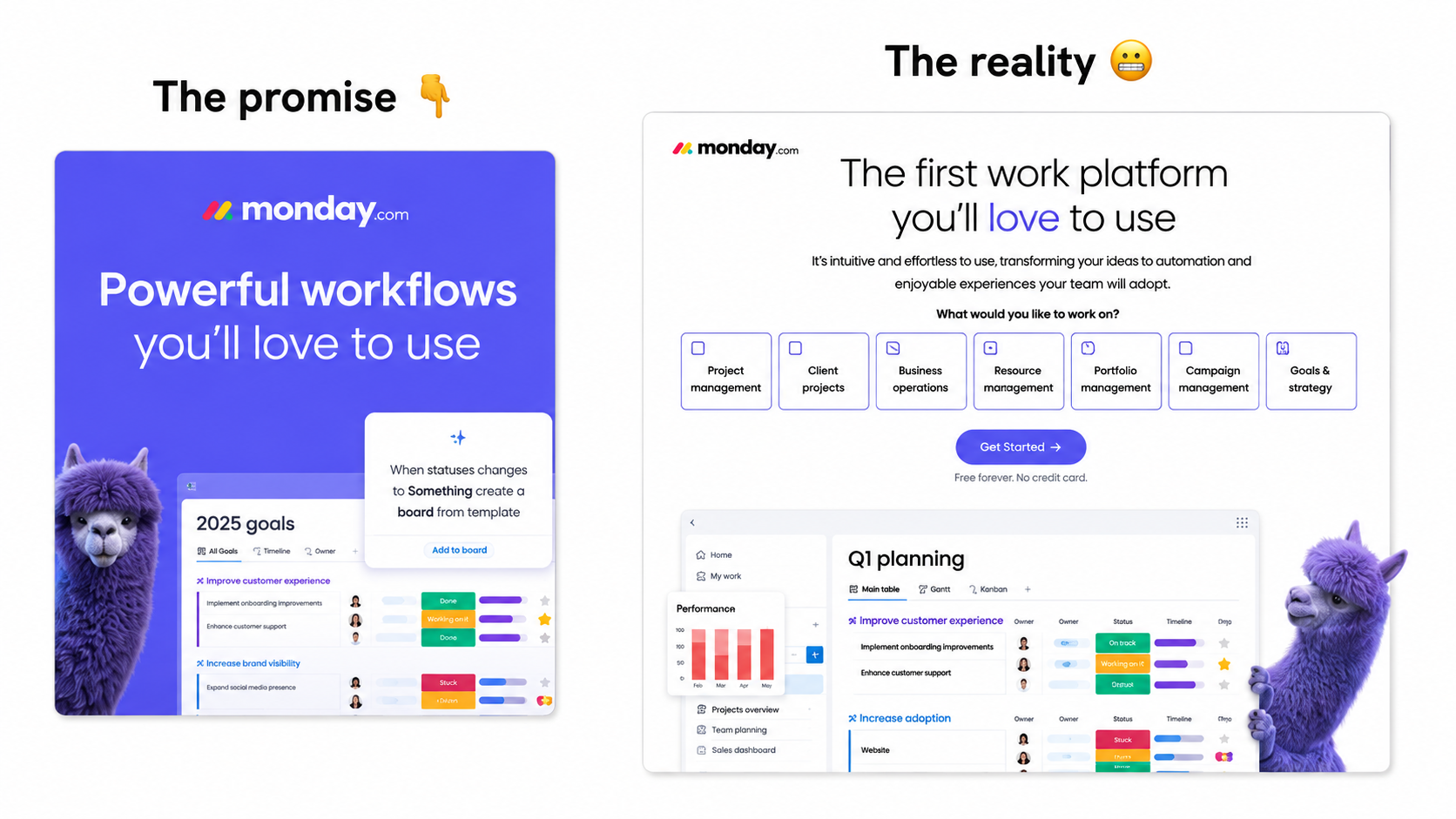
Your ad promises a distinct solution or special promotion, but your destination page sends users to a generic homepage or an unrelated product catalog.
For instance, an ad highlights a "30% Discount on Running Shoes," but clicking it opens a generic storefront showing full-priced apparel and accessories.
Why It Kills Conversions
When users do not immediately find what lured them in, friction skyrockets. Visitors will not hunt through your site navigation; they hit the back button, wasting your click spend instantly.
How to Fix Your Landing Page Message Match
Maintain total alignment across your campaign touchpoints:
- Mirror ad headlines directly in your landing page primary header.
- Direct campaign traffic to dedicated, single-offer destination pages instead of general homepages.
- Match visual branding, button colors, and value propositions across every touchpoint.
Targeting the Wrong Audience Intent
What It Looks Like
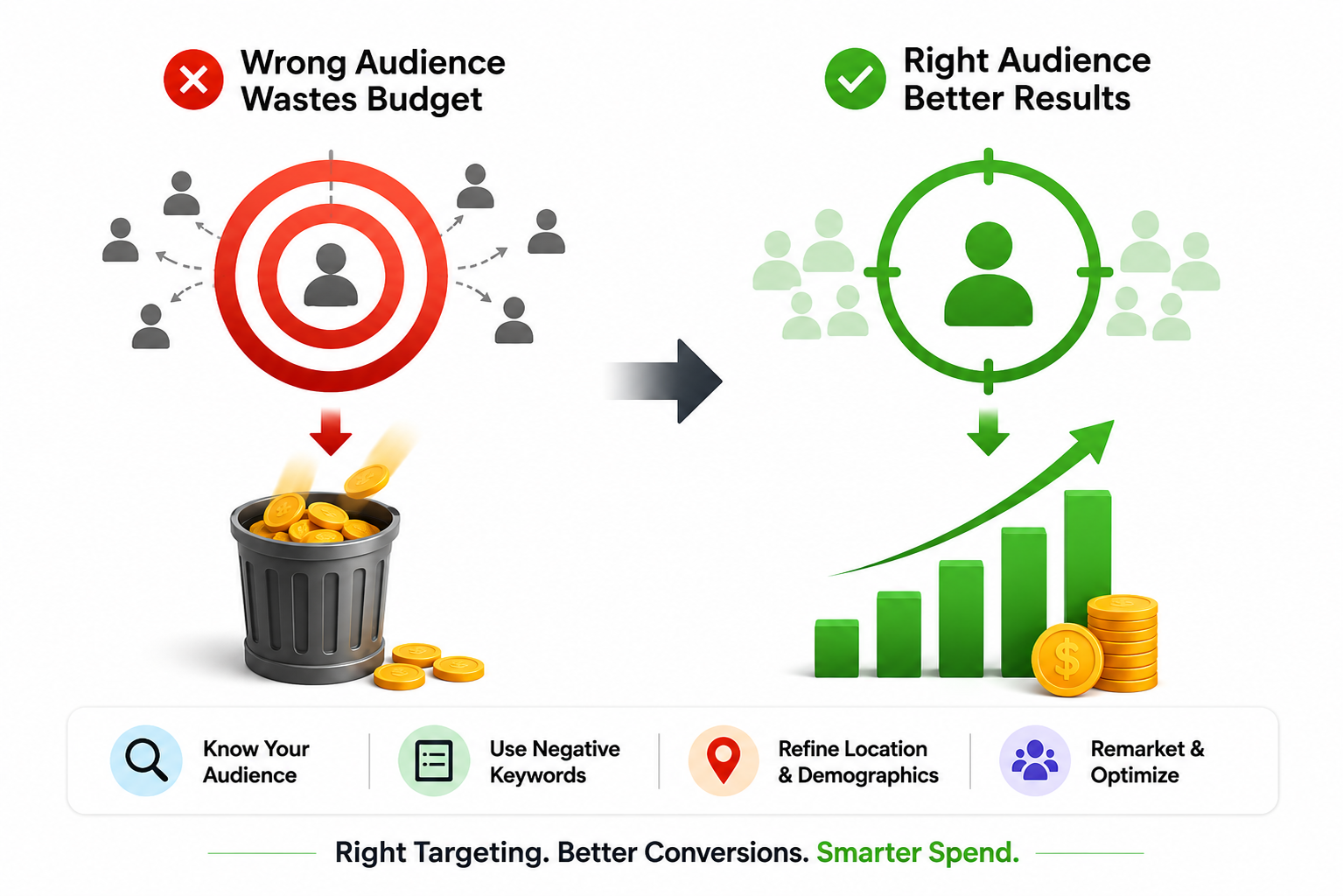
Your campaign asks early-stage researchers for high-commitment actions right away.
For example, showing a "Book a Paid Consultation Today" ad to cold traffic searching for basic industry definitions creates immediate drop-off.
Why It Hurts Your Conversion Rate
Intent dictates action. Asking for a heavy commitment from prospects who are still defining their problem creates friction and lowers your conversion rate.
How to Align Offers with Intent
Match your call-to-action to the prospect's stage in the buying journey:
- Top of Funnel: Offer low-friction resources like templates, checklists, or quick guides.
- Middle of Funnel: Use product comparison sheets, case studies, or walk-through videos.
- Bottom of Funnel: Save sales calls, free trials, and direct purchasing pitches for high-intent searches.
Slow Loading Speed and Friction-Heavy UX
What It Looks Like
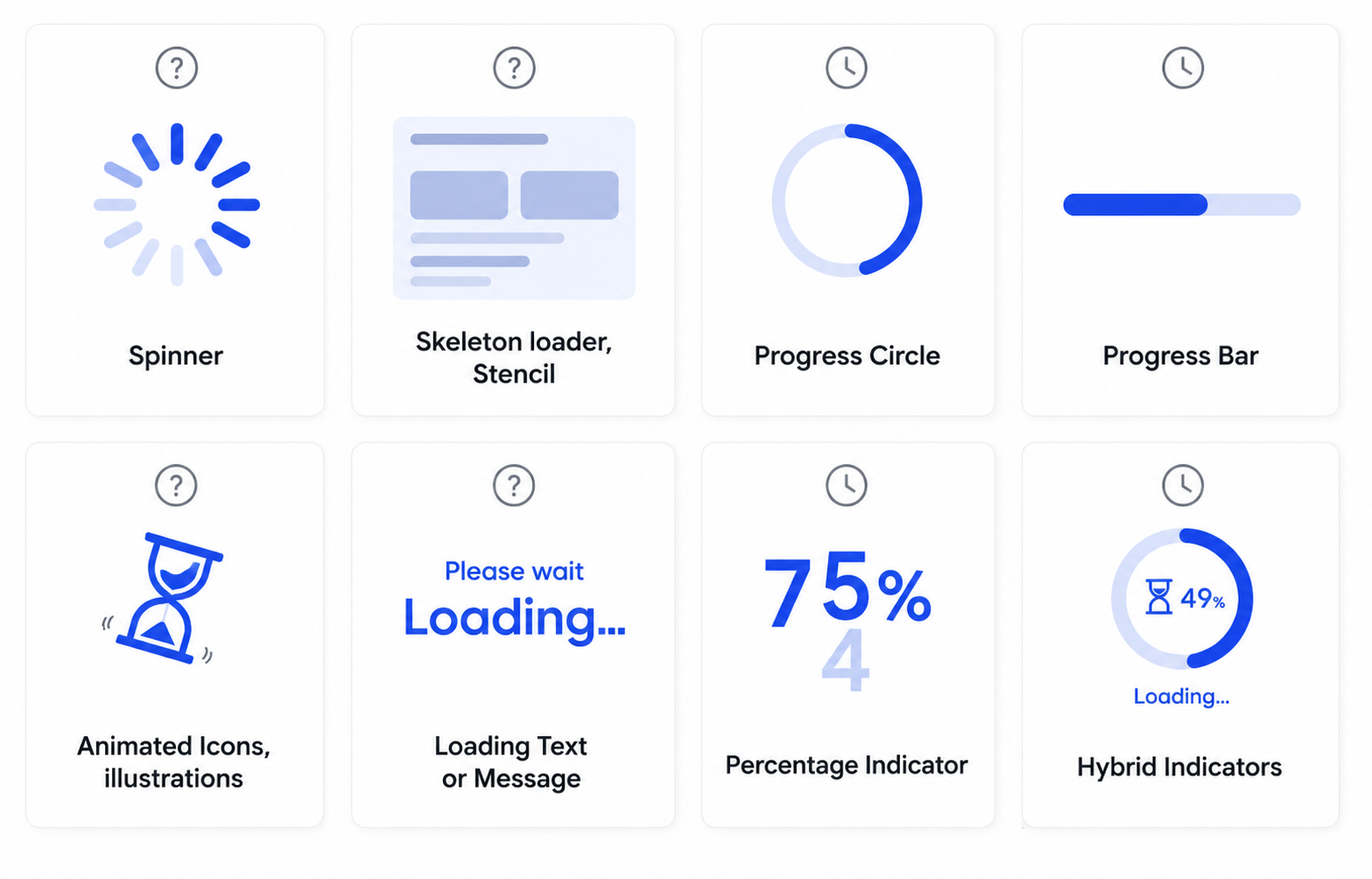
Your destination page takes over three seconds to load, breaks on mobile devices, or demands long forms just to grab a free download.
Why It Kills Performance
Paid traffic displays zero patience. Every additional second of loading time drives users straight back to search results, causing your bounce rate to soar.
How Page Loading Speed Rescues Conversions
Streamline the mobile user experience to remove conversion friction:
- Compress image assets and eliminate unnecessary scripts to push your page loading speed under two seconds.
- Optimize layout specifically for mobile viewports, keeping CTAs visible without scrolling.
- Limit form requirements to only essential fields.
Weak Value Proposition and Vague Calls-to-Action
What It Looks Like
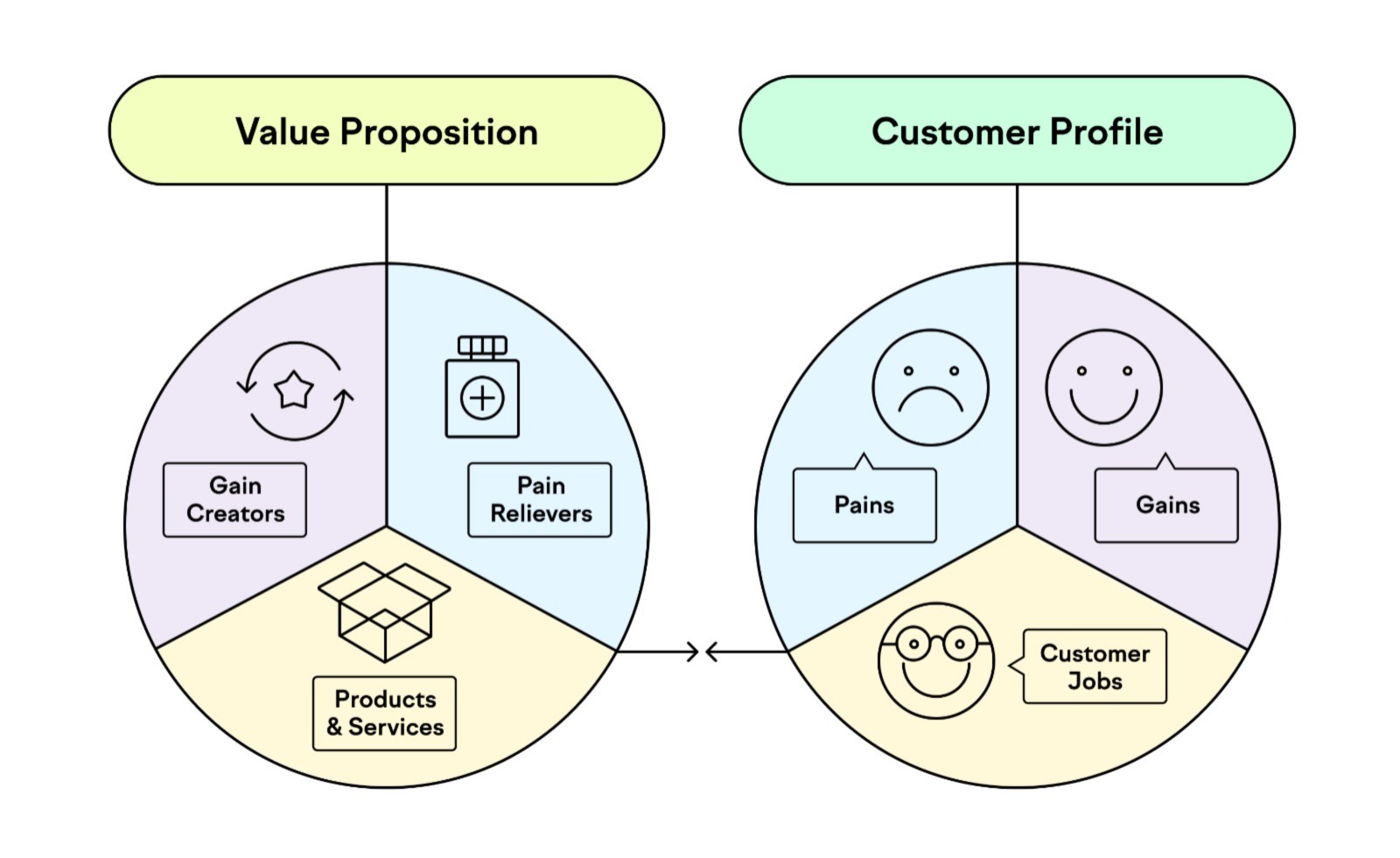
The page focuses on company features instead of customer outcomes. The CTA button uses weak language like "Submit" or "Learn More" rather than emphasizing the value of taking action.
Why It Hurts Performance
If prospects cannot determine your value within five seconds, they leave. Vague offers confuse visitors and suppress your overall conversion rate.
How to Clarify Your Offer
Structure your offer copy around immediate visual clarity:
- Write headlines that explicitly state the outcome: [Benefit] without [Pain Point].
- Highlight key benefits using short, scannable bullet points.
- Deploy high-contrast CTA buttons with action-oriented text like "Get My Free Guide" or "Start Free Trial."
Misconfigured Tracking and Attribution Issues
What It Looks Like
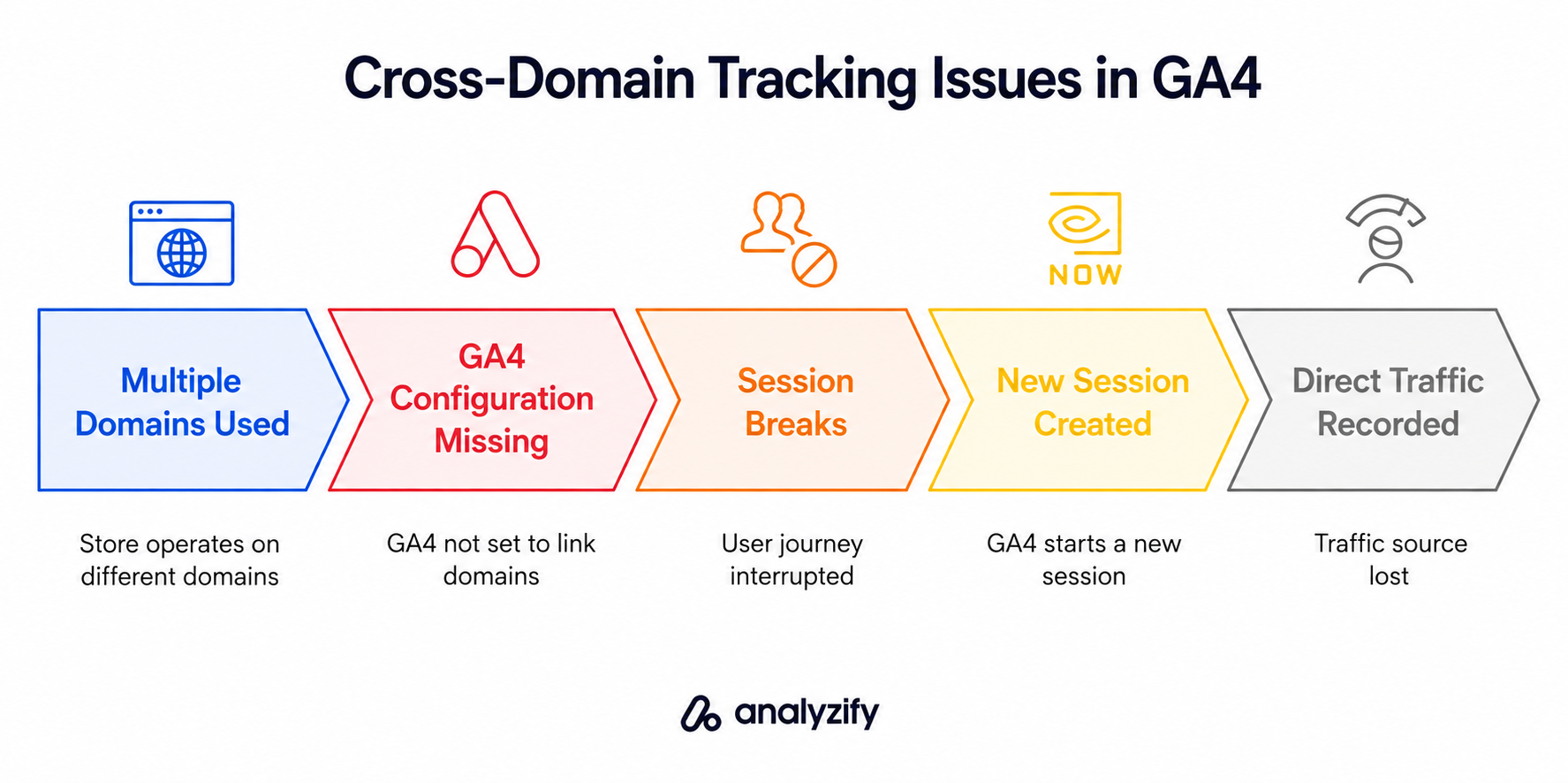
Your paid ad channels generate real leads, but your analytics software fails to record conversions accurately due to broken pixel setups or duplicate tags.
Why It Hurts Performance
Faulty tracking prevents campaign algorithms from finding high-value users. Without accurate data feedback, ad networks optimize for cheap clicks instead of paying customers.
How to Fix Tracking Setups
Audit your technical data architecture systematically:
- Confirm tracking pixels fire cleanly on thank-you and confirmation pages.
- Test conversion paths manually using browser extensions like Google Tag Assistant.
- Map core conversion actions accurately inside your campaign manager dashboard.
Conversion Funnel Audit Checklist
| Funnel Element | Poor Metric Indicator | Primary Action Item |
|---|---|---|
| Ad Creative | Low Click-Through Rate (< 1%) | Refine target parameters, refresh hook copy, and test new visual angles. |
| Message Alignment | High Bounce Rate (> 70%) | Align headline copy, color themes, and primary offers with ad messaging. |
| User Experience | High Mobile Drop-off | Keep your landing page fast, clean, and easy to navigate on phones. |
| Offer Clarity | High Time-on-Page, Low Clicks | Rebuild value headlines and contrast primary CTA buttons. |
Turning Clicks into Revenue
High click volumes mean nothing if your post-click engine fails to convert. By eliminating message mismatch, respecting user intent, and streamlining landing page performance, you transform leaky ad spend into a predictable growth engine.
Ready to Fix Your Digital Funnel?
If your paid campaigns, web performance, or customer journeys aren't delivering the ROI you expect, GStar can help. We design high-converting web applications, performance architectures, and digital growth systems that scale your business.