Scaling paid ads in B2B marketing often feels like pouring money into a leaking funnel. You optimize target audiences on LinkedIn, dial in high-intent search keywords, and achieve healthy click-through rates. Yet, your pipeline remains stagnant.
Teams routinely spend tens of thousands of dollars driving qualified decision-makers to their site, only to watch 95% or more bounce without converting.
When ad campaigns fail, ad platforms rarely take the blame. The real culprit is almost always the post-click conversion gap. It's the jarring disconnect in relevance, trust, and momentum that occurs between the ad click and the destination page.
Fixing this gap is the single highest-leverage lever to lower acquisition costs and turn wasted ad spend into predictable revenue.
High-performing paid ads fail when the post-click experience breaches buyer trust. B2B decision-makers demand immediate message match, low-friction entry points, interactive experiences, and prominent social proof. Aligning your destination pages with buyer intent eliminates conversion bottlenecks and boosts overall campaign ROI.
The Anatomy of the Post-Click Conversion Gap
To fix drop-off rates, we must first define the post-click conversion gap.
What Is the Post-Click Conversion Gap?
The post-click gap occurs when the promise, positioning, or tone of an ad fails to match the experience delivered on the landing page.
In B2C, impulse buying can overcome a mediocre user interface. In B2B, however, buyers face complex purchasing cycles, high price tags, multi-stakeholder consensus, and professional risk aversion.
The moment a decision-maker senses friction or confusion, they leave.
Why Do B2B Paid Campaigns Breakdown Post-Click?
The disconnect typically stems from four core breakdowns:
- Message Disconnect: The ad promises a specific solution, but the destination page speaks in generic product language.
- High-Friction Paths: Forcing a first-time visitor to commit to a 45-minute sales call or fill out an extensive form.
- Cognitive Overload: Cluttered destination pages with competing navigation links, multiple calls-to-action (CTAs), and dense blocks of text.
- Lack of Immediate Proof: Expecting prospects to trust claims without displaying peer validation or quantifiable results above the fold.
4 Strategic Fixes for B2B Lead Generation and Post-Click Conversion
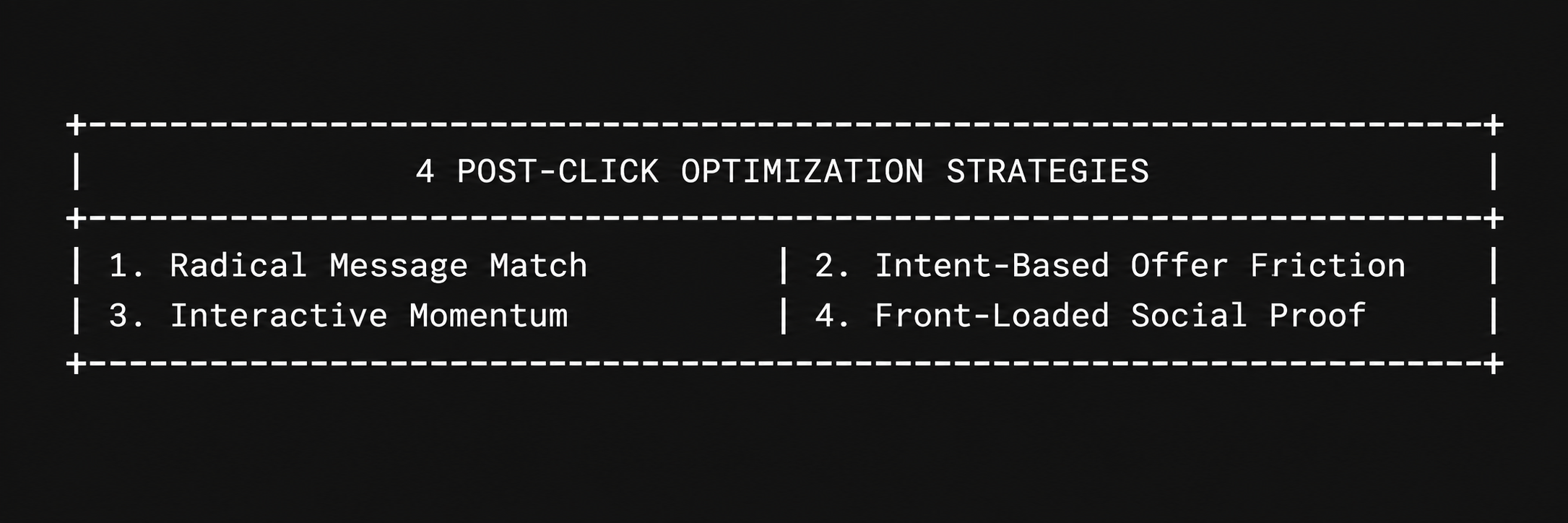
Fixing performance is not about testing button colors. It requires realigning your post-click architecture with modern buyer behavior.
1. Achieve Radical Landing Page Message Match
Message match is the degree to which your destination page mirrors the exact messaging, intent, and visual tone of the ad.
If your search ad headline reads "Automate Revenue Reconciliation for SaaS," your page headline must address that specific pain point directly. Avoid switching to vague brand statements like "The All-in-One Financial Operating System."
Maintain consistent terminology, visual cues, and value propositions across both touchpoints. This contextual continuity reassures prospects that they landed in the right place.
2. Match Offer Friction to Drive Post-Click Conversion
Pushing for high-commitment outcomes too early kills post-click conversion rates. Align your offer with the channel's intent level:
- High-Intent Search Traffic: Prospects searching for bottom-of-funnel terms (e.g., "enterprise CRM pricing") are actively evaluating tools. Direct offers like interactive product tours or pricing breakdowns perform best here.
- Low-to-Medium Intent Social Traffic: Users scrolling social feeds are not looking for sales calls. Driving them to a demo request page leads to high bounce rates. Instead, offer low-friction assets like ungated micro-demos, benchmark reports, or interactive calculators to support B2B lead generation.
3. Replace Gated Forms with Interactive Momentum
Traditional B2B lead generation relies heavily on long, gated forms. However, buyers are increasingly fatigued by form fills that trigger aggressive sales outreach.
Apply these landing page best practices to maintain user momentum:
- Use Multi-Step Forms: Break long forms into frictionless multi-step experiences. Asking two or three simple qualifying questions builds engagement before asking for contact details.
- Leverage Interactive Demos: Give buyers a hands-on preview of your product directly on the page. Self-guided walkthroughs allow prospects to experience value before booking a call.
- Offer Self-Scheduling: For high-intent demo requests, eliminate wait times by embedding scheduling tools directly into the confirmation screen.
4. Front-Load Trust Above the Fold
B2B prospects fear making wrong decisions that harm their business. Your destination page must establish credibility within the first three seconds.
Replace generic slogans with specific, quantitative outcomes. For instance, swap "Trusted by leading enterprises" for "Helping 400+ finance teams cut monthly close times by 4 days."
Position client logos, G2 ratings, and brief testimonials near your headline and primary CTA to maximize trust.
Practical Application: Ad Conversion Tips & Post-Click Audit Checklist
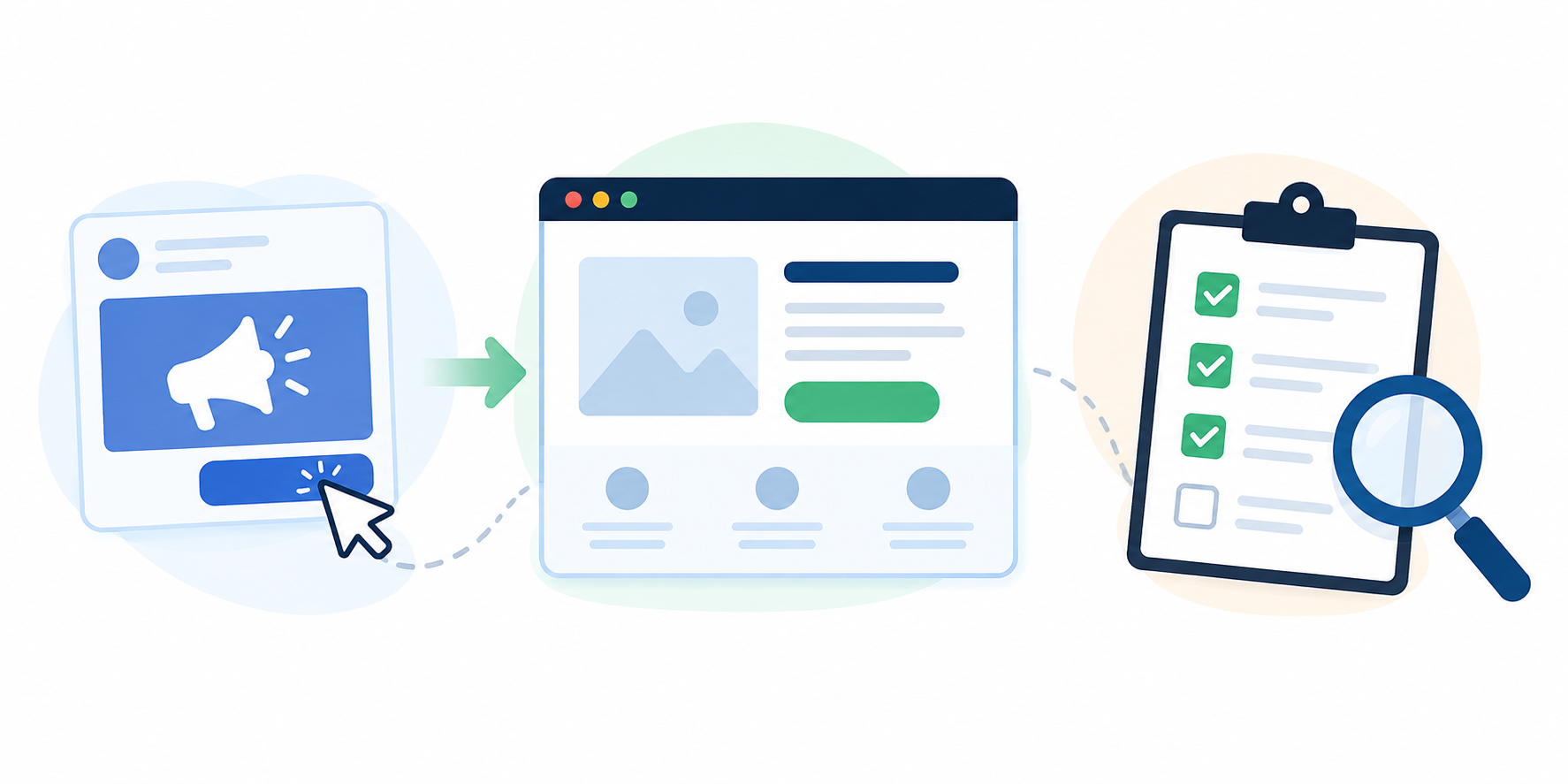
Before scaling your next campaign, evaluate your setup against these core ad conversion tips:
| Audit Point | Strategic Question | Action Required |
|---|---|---|
| Headline Alignment | Does the page headline mirror the ad hook? | Match headline keywords directly to ad copy. |
| Audience Relevance | Is social proof tailored to the targeted persona? | Display industry-specific logos and testimonials. |
| Friction Level | Does the CTA match channel intent? | Swap demo requests for interactive tools on feed ads. |
| Clarity & Focus | Is there a single, distraction-free CTA? | Remove main site navigation links to reduce ad bounce rate. |
| Technical UX | Does the page load in under 2.5 seconds? | Optimize image files and scripts for mobile performance. |
Step-by-Step Guide: How to Reduce Ad Bounce Rate Across Funnels
To systematically improve performance across active paid ads, follow this execution blueprint:
Identify High-Bounce Ad Groups
Review your analytics to flag campaigns with high click volume but low conversion rates.
Re-align Headline & Offer Match
Rewrite destination page headlines to reflect exact ad copy hooks, adjusting CTAs based on channel intent.
Simplify Entry Points
Replace traditional long forms with multi-step forms or interactive product tours to reduce ad bounce rate.
Deploy Above-the-Fold Proof
Add quantitative customer metrics and peer logos directly next to the primary offer.
Test and Measure Pipeline Impact
Track improvements in qualified pipeline rather than vanity form fills alone.
Turning Paid Ads Traffic into Pipeline
Paid acquisition in B2B is no longer just an ad-targeting game. Media buying automation means competitive advantage has turned to post-click execution. When you treat destination pages as direct extensions of your ad copy, you eliminate conversion friction. Implementing these landing page best practices changes paid ads from an expensive experiment into a reliable growth engine.
- Audit Active Campaigns: Review your top three ad spend channels for headline and offer alignment today.
- Remove Navigation Distractions: Strip header menus and secondary links from dedicated ad pages.
- Implement Low-Friction Entry Points: Upgrade high-friction forms with interactive preview tools or multi-step flows.
Frequently Asked Questions
What is a good conversion rate for B2B paid ads?
Average B2B landing page conversion rates typically range between 2% and 5%. However, optimized post-click experiences that feature strong message match and low-friction interactive offers frequently achieve conversion rates of 8% to 12% or higher.
How do I reduce ad bounce rate on LinkedIn campaigns?
To reduce ad bounce rate on social feed campaigns, avoid sending cold traffic directly to high-commitment "Book a Demo" pages. Instead, direct users to low-friction offers like interactive micro-demos, ungated tools, or targeted benchmark reports that match feed-browsing intent.
Should I send paid ads traffic to my homepage or a dedicated page?
Always send ad traffic to a dedicated destination page. Homepages contain broad messaging and multiple navigation links that distract visitors, leading to higher bounce rates and lower overall conversion rates.
How does message match affect quality score and ad costs?
Higher message match improves landing page relevance scores on platforms like Google Ads. Better relevance scores raise your overall Quality Score, which lowers your cost-per-click (CPC) and improves ad placement efficiency.
Ready to Maximize Your Paid Media ROI?
Looking to eliminate post-click friction and turn ad clicks into qualified pipeline? Let's audit your paid campaigns and build a high-converting acquisition funnel.