For over two decades, digital discovery followed a straightforward rule: optimize your content, rank on page one of Google, and harvest organic traffic. Today, that model no longer tells the full story.
Search behavior has fractured across three distinct discovery surfaces. Users no longer rely exclusively on ten blue links; they ask voice assistants for quick facts, read Google AI Overviews, and prompt generative engines like ChatGPT, Perplexity, and Gemini for tailored recommendations.
If your website traffic has plateaued while your organic keyword rankings remain stable, you are experiencing this change firsthand. Moreover, nearly 68% of Google searches now end without a single click to the open web, and traditional search engine query volumes are about to decline by 25% as users go to generative assistants.
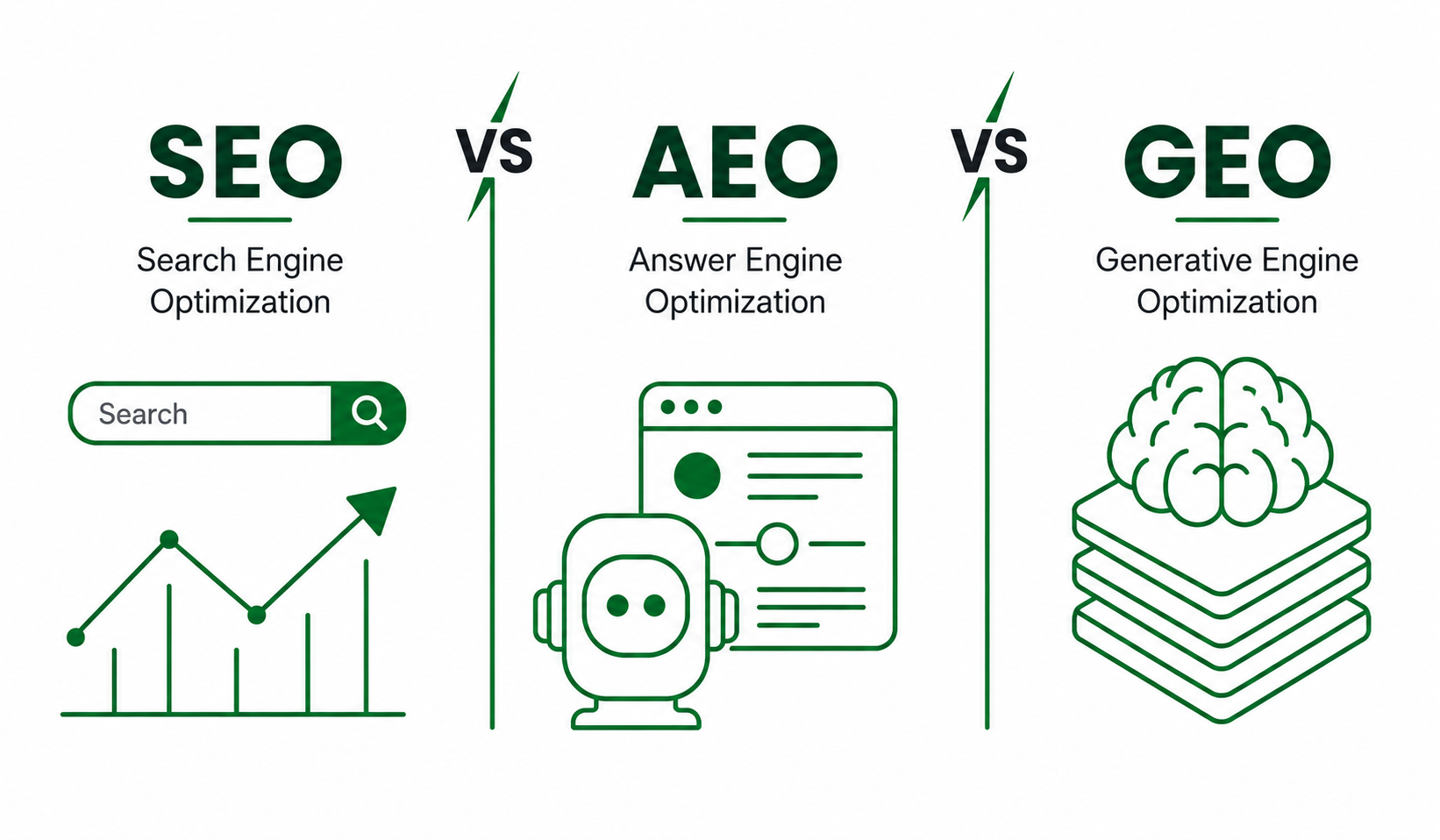
The search has evolved into three distinct disciplines: SEO, AEO, and GEO. Modern brands must optimize for all three to remain visible.
Search has fractured into three disciplines — SEO for organic clicks, AEO for instant answers, and GEO for AI citations. Modern brands need to optimize for all three simultaneously to stay visible as traditional search volume declines.
What Are SEO, AEO, and GEO? (Definitions & Core Intent)
To stay relevant with modern search strategy, you must first define the three pillars:
- SEO (Search Engine Optimization): The practice of structuring website infrastructure, page content, and authority signals to rank in organic search engine results pages (SERPs) like Google and Bing. The primary conversion goal is driving a direct link click to your site.
- AEO (Answer Engine Optimization): The discipline of formatting facts and solutions so algorithms extract them as the immediate answer for Google Featured Snippets, "People Also Ask" accordions, voice search, and conversational UI. The primary goal is capturing zero-click visibility and immediate authority.
- GEO (Generative Engine Optimization): The strategic process of optimizing content, entity signals, and brand citations so large language models (LLMs) synthesize and reference your brand when generating responses in ChatGPT, Claude, Perplexity, and Gemini. The primary goal is securing brand citations and inclusion in AI recommendations.
The Turn: Why SEO Alone Is No Longer Enough in 2026
Relying solely on traditional SEO creates a growing visibility deficit. Modern users bypass traditional results pages entirely when looking for fast answers or complex research.
When a prospective buyer asks an AI engine, "What is the best workflow automation software for mid-sized logistics companies?" the model does not return a list of links. It synthesizes an answer from dozens of sources and highlights three cited brands.
If your content strategy is optimized only for traditional keyword density, you miss out on conversational queries, voice searches, and AI recommendations altogether.
Search Engine Optimization (SEO): The Structural Foundation
What It Is
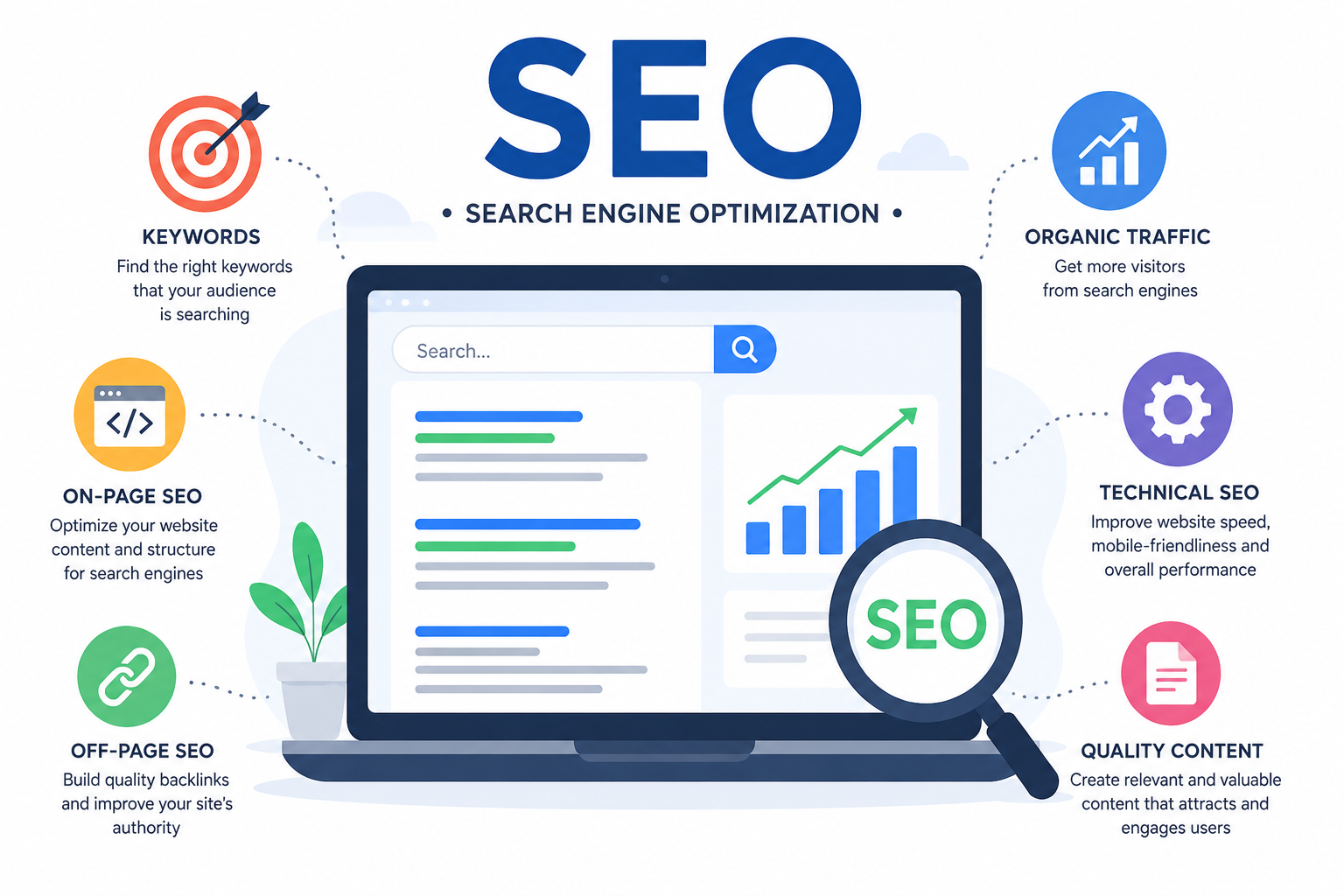
SEO remains the underlying technical and structural foundation for all online discovery. Without clean site architecture, fast page performance, and authoritative backlinks, search crawlers and AI bots cannot index your content effectively.
Why You Need It
Transactional queries such as "buy industrial air filter online" or "commercial HVAC contractor near me" still rely heavily on direct search engine clicks. Traditional SEO captures high-intent users ready to turn to a landing page and convert.
How to Execute SEO in 2026
- Build Topical Authority: Group content into clear hub-and-spoke pillar models to demonstrate deep domain expertise to search crawlers.
- Maintain Technical Health: Ensure fast server response times, proper XML sitemaps, mobile-first layouts, and clean site architecture.
- Acquire Quality Backlinks: Build domain authority through relevant industry mentions, editorial features, and partner publications.
Answer Engine Optimization (AEO): Winning the Instant Response
What It Is
AEO focuses on extractability. Answer engines want factual, unambiguous information they can lift cleanly from your page without altering its meaning.
Why You Need It
Search engines increasingly prioritize zero-click results. Capturing featured snippets or "People Also Ask" placements positions your brand as the definitive authority before a user scrolls through organic links.
How to Execute AEO
- Lead with Direct Answers: Place a concise 40-to-60-word answer directly beneath H2 or H3 subheadings that mirror user questions.
- Use Structured Data Schema: Implement clean FAQPage, HowTo, and Article schema markup to help algorithms read your content hierarchy effortlessly.
- Format for Extractability: Organize data using clear bulleted lists, numbered steps, and markdown comparison tables.
Generative Engine Optimization (GEO): Securing AI Citations
What It Is
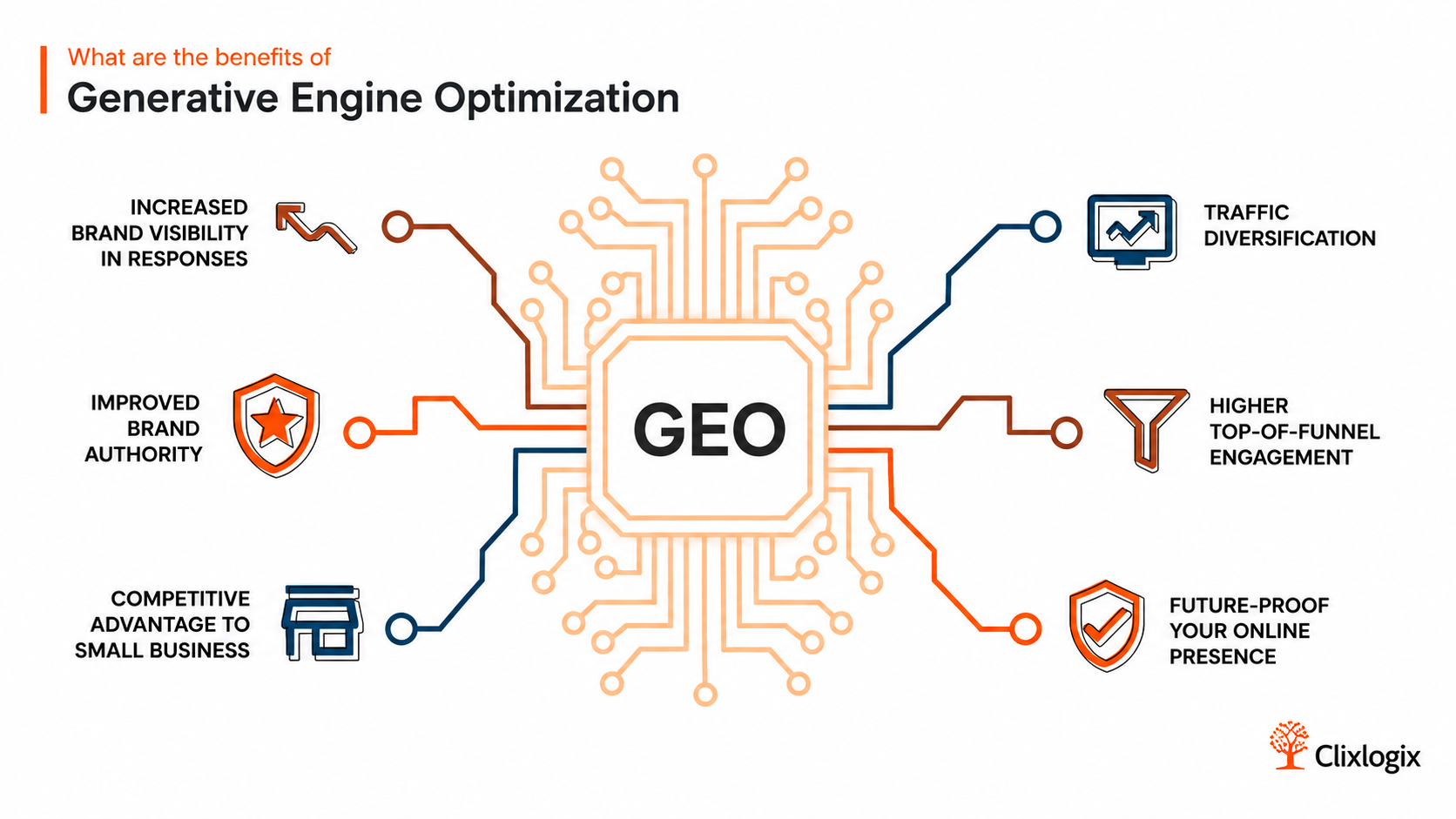
GEO is the process of shaping your brand's digital footprint so generative AI models trust, summarize, and cite your content in synthesized answers.
Why You Need It
When prospects use tools like ChatGPT or Perplexity for product research, GEO ensures your brand is explicitly named and linked in the generated response.
How to Execute GEO
- Establish Entity Clarity: Use consistent organization schema, Wikidata entries, and uniform brand naming so AI models recognize your organization as a distinct, trusted entity.
- Publish First-Party Data: Generative engines heavily cite original research, proprietary survey stats, unique case studies, and quote-worthy data points.
- Build Third-Party Proof: LLMs cross-reference information. Secure brand mentions across industry news portals, review platforms, and authoritative trade publications to validate your claims.
Side-by-Side Comparison: SEO vs. AEO vs. GEO
| Strategy Component | Details | Details |
|---|---|---|
| SEO | Goal: Drive clicks to organic web pages. Target: Google, Bing traditional SERPs. | Format: Long-form, comprehensive articles. Metric: Organic rankings and link CTR. |
| AEO | Goal: Win direct answer boxes and snippets. Target: Featured Snippets, Voice Assistants, PAA. | Format: Concise Q&A blocks, lists, and tables. Metric: Snippet ownership and zero-click reach. |
| GEO | Goal: Secure brand citations in AI responses. Target: ChatGPT, Perplexity, Gemini, Copilot. | Format: Fact-dense guides with original research. Metric: Citation frequency in AI responses. |
Step-by-Step Framework: Unifying Your 2026 Search Strategy
Audit Technical Readiness
Confirm that search crawlers and AI bots (e.g., GPTBot, PerplexityBot) can easily crawl and index your domain.
Structure Content for Extractability
Header titles should reflect conversational search queries. Provide a clear 2-sentence summary immediately below each header before diving into detailed analysis.
Embed Schema Markup
Add Organization and FAQPage schema to give algorithms unambiguous structural context.
Publish Original Data
Include proprietary benchmarks, original stats, or expert quotes that generative models can cite as unique references.
Monitor AI Citations
Track how often your brand appears in AI-generated answers for your top revenue keywords alongside traditional Google organic tracking.
Building a Resilient Discovery Engine
Search is no longer a single channel; it is a multi-modal ecosystem spanning traditional algorithms, instant answer engines, and conversational AI models. Brands that adapt their strategy to incorporate SEO, AEO, and GEO simultaneously will capture market share.
- Audit AI Visibility: Prompt ChatGPT, Perplexity, and Gemini with five core industry queries to see if your brand is cited in generated answers.
- Optimize High-Traffic Content for AEO: Add direct 40-word answer summaries beneath the subheadings of your top 10 organic landing pages.
- Implement Schema Markup: Ensure your website's organization details, FAQs, and main articles use updated schema markup.
Ready to Modernize Your Search & Growth Strategy?
If your organic discovery, web platform, or digital strategy needs a modern upgrade, GStar can help. We engineer high-performance web applications, modern design systems, and scalable growth architecture built for the AI-first web.