Building a web presence used to be straightforward: you either spent months hiring a web agency for custom web development, or you struggled through a rigid template site.
Generative web development platforms now promise complete, responsive, multi-page websites generated in under 60 seconds from a single prompt.
However, behind headline-grabbing speed lies a critical strategic question for founders and business leaders: Are AI website builders ready to replace traditional engineering, or are they just faster tools for simpler jobs? Navigating this choice determines how quickly you launch, how seamlessly you scale, and whether your platform builds long-term technical debt.
AI web tools provide unprecedented speed and low upfront costs, making them ideal for rapid validation and standard marketing sites. Conversely, tailored engineering remains essential for complex business logic, bespoke brand identity, and complete code ownership. The modern winning strategy often combines both into a hybrid workflow.
The 2027 Web Options: Understanding Your Options
Before evaluating strategy, let's define the modern toolkit. The turn isn't just about automated design; it is about where execution happens.
What is an AI Web Development Platform?
An AI builder utilizes generative AI models to turn natural language prompts into structured site layouts, baseline styles, and draft copy.
AI web development tools generally fall into three distinct tiers depending on your technical workflow:
- Prompt-to-Site Platforms (Wix Studio AI, Framer AI, Webflow AI, Relume): These allow non-technical teams to turn text descriptions into fully structured, styled, and interactive web pages instantly.
- AI Code Assistants & Canvas Environments (v0.dev, Bolt.new, Cursor, Claude Artifacts): Built for front-end engineers, these tools turn natural language into clean, production-ready React, Vue, or Tailwind code.
- Enterprise AI Engine Integrations: Native optimization engines embedded inside enterprise CMS setups that tune content, metadata, and schema dynamically for search engine visibility.
Feature Comparison: AI Builder vs Custom Web Development
| Dimension | AI Web Tools | Custom Development |
|---|---|---|
| Speed to Launch | Minutes to Hours: Instant layouts, draft copy, and baseline styles. | 4 to 16+ Weeks: Comprehensive discovery, visual design, testing, and staging. |
| Upfront Investment | Low: Low monthly SaaS subscription tiers ($15–$50/mo). | High: $5,000 to $50,000+ agency or freelance developer contracts. |
| Scalability & Logic | Moderate: Good for standard marketing sites, simple e-commerce, and portfolios. | Infinite: Unconstrained database architectures, custom APIs, and tailored user flows. |
| Brand Originality | Moderate: High visual quality, but dependent on AI training patterns and theme bounds. | 100% Bespoke: Handcrafted micro-interactions, distinct brand design systems, and identity. |
| Code Ownership | Limited: Often locked into proprietary visual platforms or closed ecosystems. | Full Control: Clean, version-controlled source code hosted wherever you choose. |
Why The Choice Matters: 3 Core Architectural Trade-Offs
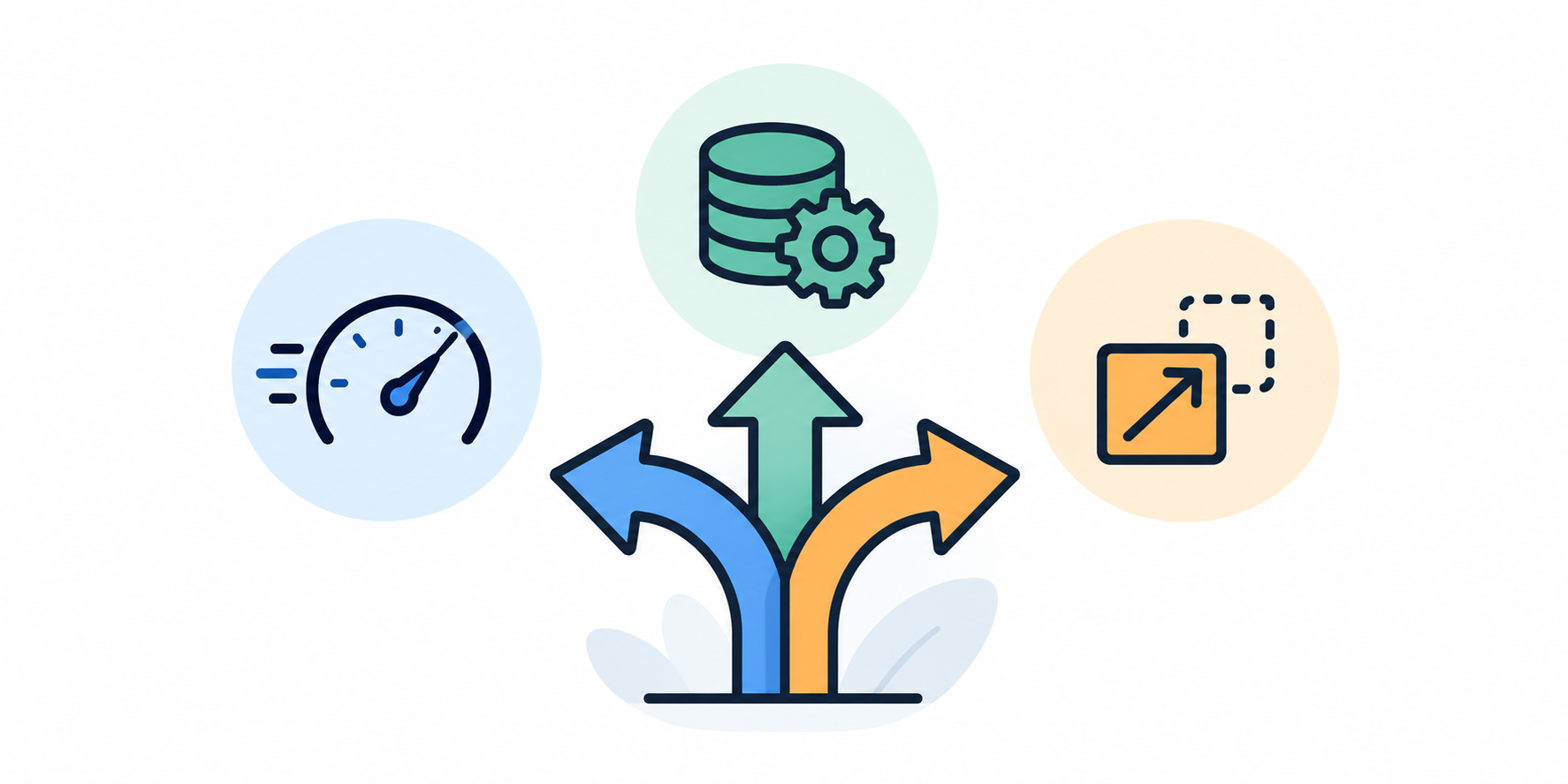
1. Speed & Momentum vs. Absolute Brand Resonance
Generative platforms excel at eliminating the blank canvas problem. They draft layout hierarchies, responsive breakpoints, and foundational content in seconds.
If your primary goal is validating an idea, launching a product offer, or establishing an immediate market presence, prompt-driven systems give you speed that traditional agency workflows cannot match.
However, true brand distinction requires nuance. A bespoke custom website allows for tailored micro-interactions, unique design systems, and visual storytelling built around your specific audience. While automated systems get you to 80% completion effortlessly, that final 20% of brand differentiation requires human craft.
2. Standard Infrastructure vs. Architectural Control
When you build using a SaaS generator, you inherit its underlying infrastructure. For standard B2B services, portfolios, or content hubs, this is a major advantage: managed security, automated hosting updates, and built-in mobile responsiveness come pre-configured.
However, as your operational logic grows complex, rigid platform constraints emerge. When your platform requires deep third-party API hooks, dynamic custom databases, or ultra-optimized rendering paths, hand-coded architectures become mandatory. Custom stacks built on frameworks like Next.js or headless CMS setups ensure you never hit a proprietary feature ceiling.
3. Immediate Savings vs. Technical Debt
Generative options offer low financial barriers to entry. You can deploy a functional platform in an afternoon for the cost of a monthly subscription.
However, forcing a visual generator to execute complex, unintended workflows creates bloated markup, messy inline styles, and maintenance bottlenecks. Over-customizing a restricted platform generates significant technical debt. Investing in custom web development carries higher upfront costs, but yields a clean, maintainable codebase engineered around your long-term roadmap.
How to Choose: Decision Matrix for Founders
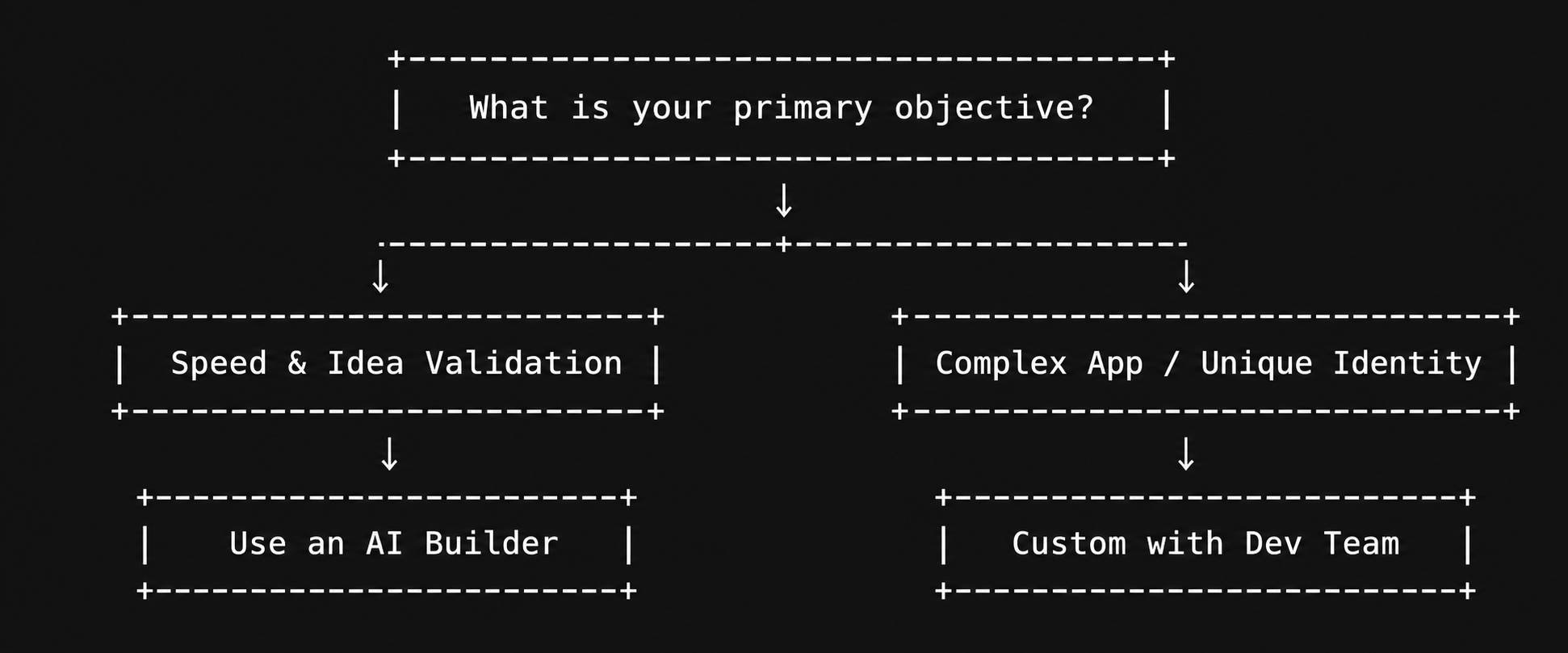
To select the right path, evaluate your core business constraints, technical requirements, and immediate growth targets.
Choose an AI Web Builder If:
- You are validating a new business model, testing a marketing offer, or launching an event page.
- Your primary constraints are immediate speed-to-market and initial startup budget.
- You need a clean, high-converting custom website structure without complex backend processing.
- Your non-technical team needs to update marketing content independently without filing engineering tickets.
Choose Custom Web Development If:
- Your web presence is your core SaaS product, web application, or client portal.
- You require strict security compliance, multi-tenant databases, or specialized API integrations.
- Uncompromising visual differentiation and custom interactive design drive your competitive advantage.
- Your long-term operations require full code ownership and self-hosted infrastructure.
Knowing When to Scale: When to Switch from AI Builder to Custom Code
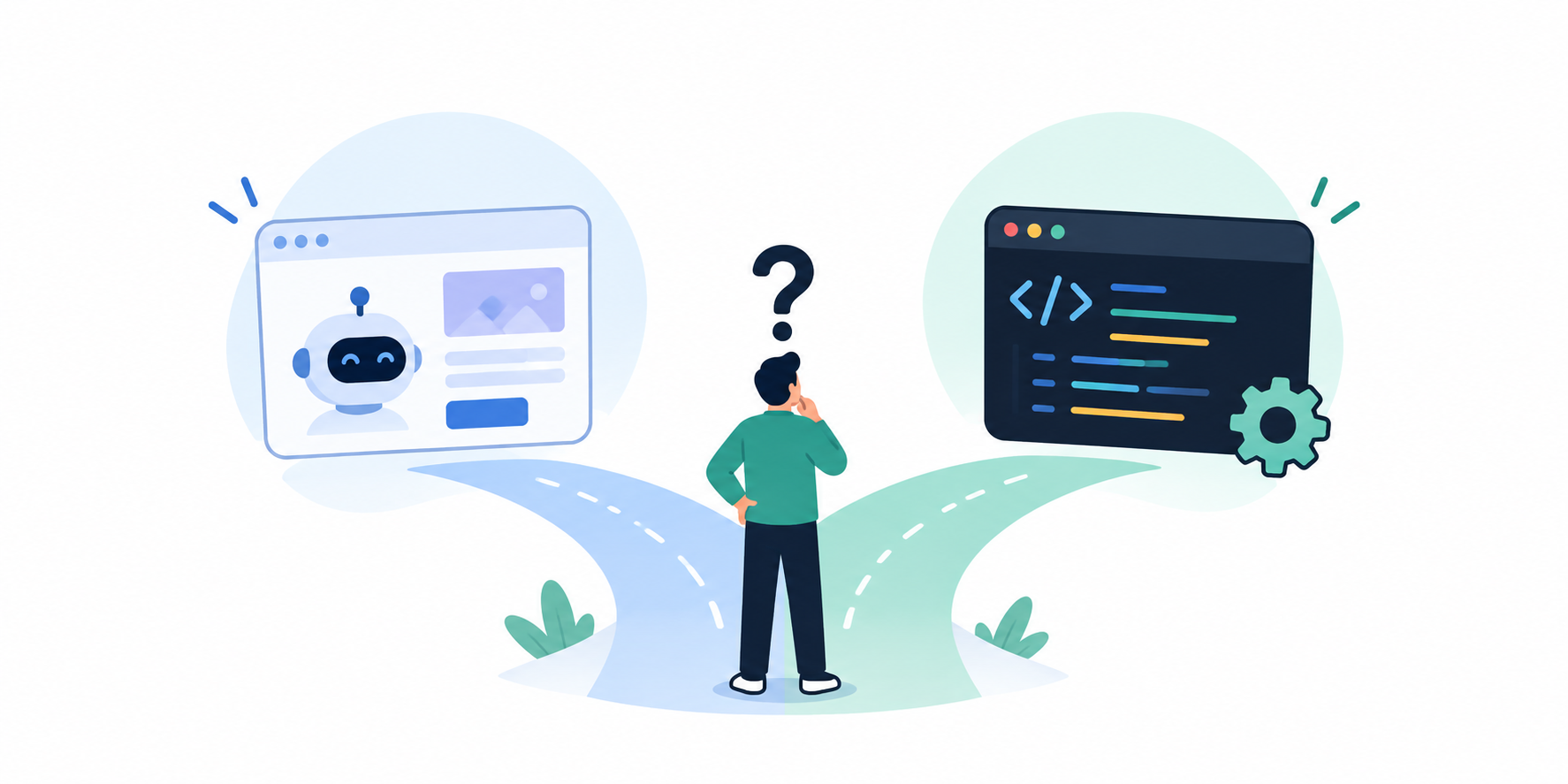
Starting with a visual generator does not mean staying locked into one forever. Many successful startups launch on automated visual tools to gain initial market traction.
You should plan when to switch from AI builder to custom code based on clear operational triggers:
- Performance Degradation: Your page load times slow down due to platform script bloat, hurting SEO performance and user conversion rates.
- Integration Limits: You cannot connect required enterprise CRMs, custom payment portals, or proprietary databases through standard webhooks.
- Security & Compliance Demands: You need specialized data encryption, SOC2 compliance, or custom authentication flows that closed platforms cannot host.
- Brand Ceiling: Your visual design feels constrained by platform templates, preventing you from deploying bespoke user experiences.
When your platform changes from an operational accelerator into a growth bottleneck, migrating to custom code becomes the logical next step.
Practical Deployment: The Step-by-Step Hybrid Workflow
The strategic debate is rarely binary anymore. Leading engineering teams combine automated scaffolding with bespoke development. Here is how modern teams execute a hybrid deployment:
Map Wireframes Rapidly
Use tools like Relume AI to generate site maps, content section structures, and layout hierarchies in minutes instead of weeks.
Generate Component Scaffolding
Pass wireframe specs into assistants like v0.dev or Cursor to auto-generate clean front-end UI components in Tailwind or React.
Refine & Integrate
Import generated components into your custom engineering environment (such as Next.js). Connect your production APIs, custom database schemas, and analytics pipelines.
Optimize Performance
Audit generated code to prune redundant styles, fix accessibility gaps, and secure end-to-end data flow before deployment.
Taking Your Next Strategic Step
AI platforms have rewritten the rules of modern web deployment. They eliminate repetitive scaffolding and empower small teams to launch at unprecedented speeds. However, technology choices must align with business strategy. Use automated web tools to validate, iterate, and launch quickly. Pivot to custom engineering when scaling complex business logic, protecting proprietary code, and building uncompromising brand equity.
- Audit Your Current Stage: If you are pre-revenue or testing a new offer, deploy on a modern visual platform this week.
- Identify Architectural Bottlenecks: If platform limits are stalling conversions or blocking API hooks, outline your technical requirements for custom migration.
- Evaluate Strategic Development Partners: Choose an engineering team that understands how to blend rapid AI workflows with robust, scalable custom code.
Frequently Asked Questions
Are AI web development tools good for SEO?
Yes, most top-tier platforms generate clean semantic HTML, structured metadata, and mobile-responsive layouts out of the box. However, as custom dynamic pages and content scale, bespoke code bases provide far greater control over advanced schema, edge caching, and site performance optimization.
Can I export code from an AI builder to build a custom website?
It depends on the tool. Platforms like v0.dev and Bolt.new generate raw React or Tailwind code meant for clean export into custom repositories. Closed visual platforms often lock your layout into their proprietary hosting ecosystem, making migration a re-platforming effort.
How much does custom web development cost compared to AI tools?
SaaS generators typically cost between $15 and $50 per month, offering an extremely low entry threshold. Custom engineering contracts generally range from $5,000 to over $50,000 depending on database complexity, security specifications, and custom design requirements.
Will AI replace custom website developers completely?
No. While automated systems replace repetitive layout assembly, they enhance rather than replace developer value. High-level architecture, complex backend integrations, database security, and bespoke interactive features still require human engineering.
Ready to Build Your Next Web Project?
Looking to build a scalable digital presence? Let's discuss whether rapid AI prototyping or custom web development fits your roadmap.